
When people plan to build a lavish, luxury home, their focus is often entirely on expensive furniture, wall paint, or Italian marble. However, there is one crucial element that is frequently overlooked: proper lighting.
Imagine spending a fortune to build a stunning home, only to have lighting that resembles a government office or a hospital—would that be enjoyable? Certainly not! The right lighting doesn’t just illuminate your home; it gives it the ambiance and comfort of a five-star hotel.
In this guide, we will explain in simple terms how to plan the perfect lighting for your home—ensuring it looks beautiful and leaves your guests truly impressed.
1. Why is good lighting essential? (The Role of Interior Lighting)
Many people believe the sole purpose of lighting is to dispel darkness, but in luxury homes, lighting serves three major functions:
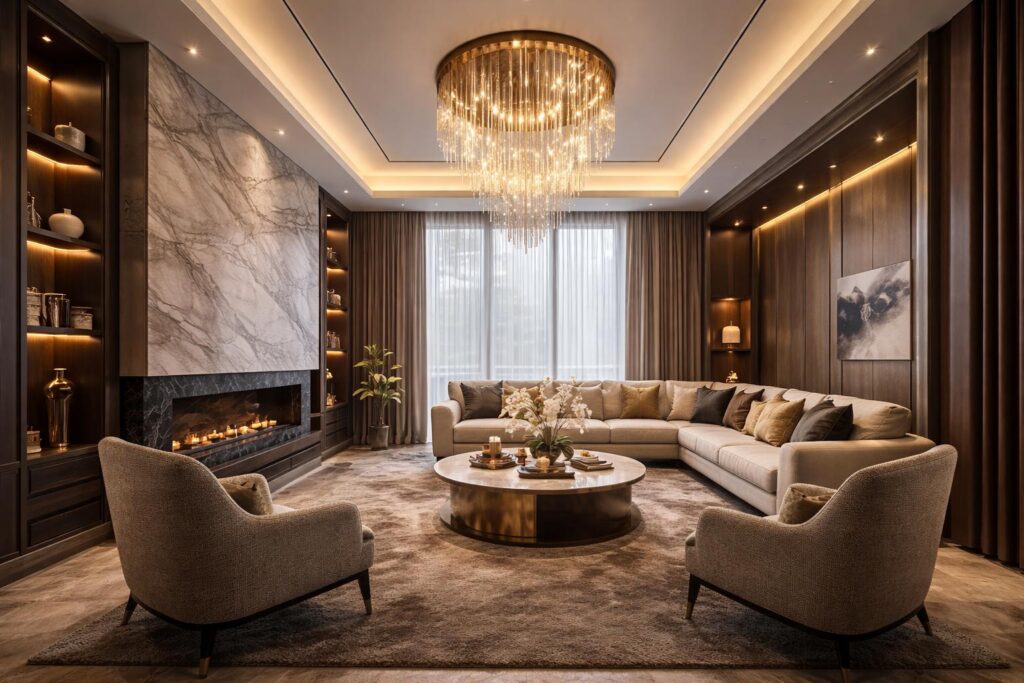
Enhancing Architecture and Design:
Every home has a unique design—whether it features false ceilings, elegant staircases, or beautifully textured walls. When lighting is positioned correctly and at the right angles, these design elements truly stand out.
Improving Mood and Comfort:
After the hustle and bustle of the day, you crave tranquility when you return home. Soft, warm (yellow-toned) lighting in the bedroom calms the mind, while bright lighting in the kitchen or at a study desk provides the energy needed for tasks.
Increasing Property Value:
A well-planned lighting design lends a premium look to your entire home. Should you ever decide to sell or rent out the property, it will create a powerful first impression on any prospective buyer or tenant.
2. The Four Layers of Lighting: What are they?
Just as we layer our clothing in winter for protection (wearing a shirt, then a sweater, then a jacket), a luxury room also features four distinct layers of lighting. You cannot achieve a luxurious look simply by installing a single bulb or tube light.
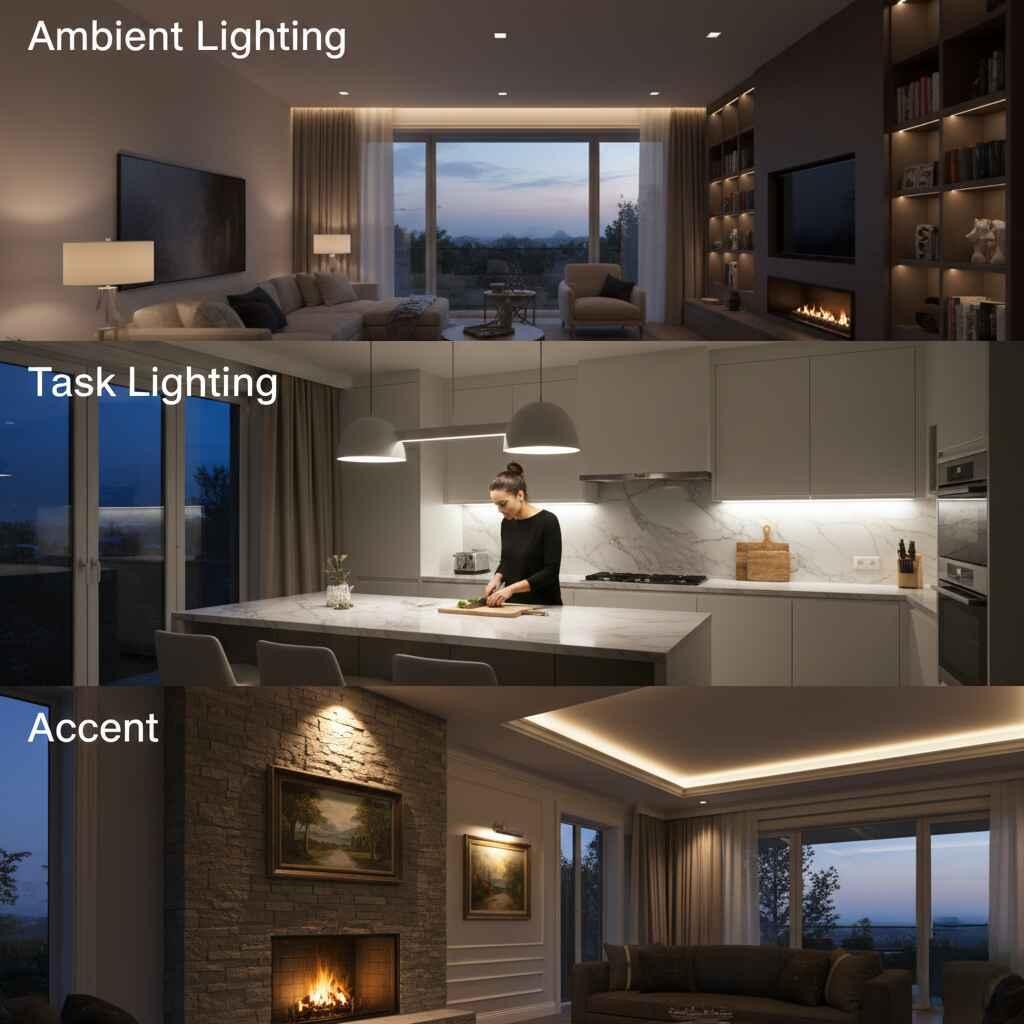
Ambient Lighting (General room illumination):
This is the room’s primary light source. The light that fills the entire room evenly—the one you switch on immediately upon entering—is called ambient lighting. Recessed lights (concealed lights) in the ceiling are a prime example of this.
Task Lighting (Functional lighting):
This lighting is installed to facilitate specific activities. For instance, you need light while chopping vegetables on the kitchen counter, a lamp on your study table while reading, or bright light near the mirror while shaving or applying makeup.
Accent Lighting (Highlighting/Showcase lighting):
The purpose of this lighting is to draw attention to a specific, beautiful feature in the room. For example, a spotlight directed at an expensive painting, a lovely showpiece, or a small home shrine in your living room is considered accent lighting.
Decorative Lighting (Aesthetically pleasing lighting):
This lighting serves not just to illuminate, but to enhance the home’s beauty. It looks visually appealing even when switched off—such as a large chandelier hanging in the hall or fancy wall-mounted lights.
3. What is the latest trend? (Modern Interior Lighting Trends in India)
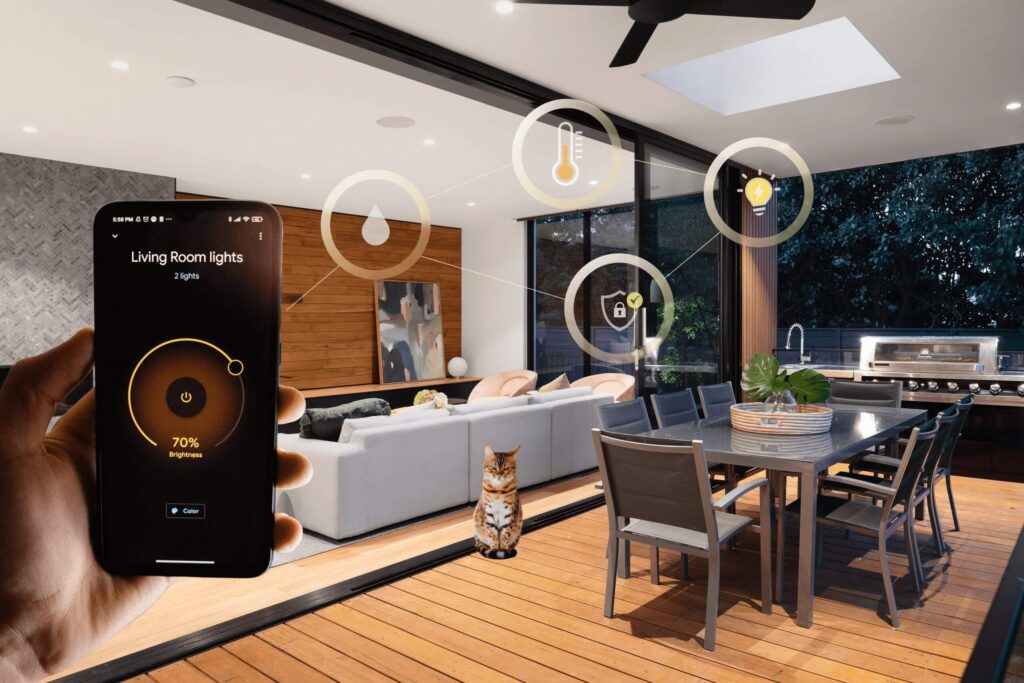
Smart LED Lighting:
You no longer need to repeatedly get up from the sofa or bed to switch the lights on or off. You can control the lights via a mobile app or simply by saying, “Alexa, turn off the lights.”
Dim-to-Warm LEDs:
This is a fascinating technology. When you dim the light, its color automatically shifts from white to a warm, candle-like yellow. It creates a wonderful ambiance while watching movies at night or preparing for sleep.
Pendant Clusters:
It is currently very trendy to install a cluster of two or three fancy hanging lights—rather than just a single one—above the dining table or in the home’s entryway (foyer). This creates a truly regal look.
Energy-Efficient Smart Systems:
These systems control home lighting in a way that prevents glare (protecting your eyes) while significantly reducing electricity bills.
Natural Light Effect (Biophilic Lighting):
Modern lights are available that mimic the first rays of the morning sun; as evening approaches, their color automatically shifts to resemble the setting sun. This maintains a natural atmosphere inside the home.
How to Choose a Lighting Consultant?
When building a home, people often entrust the lighting work to a general electrician. This is a major mistake. Keep these points in mind when selecting a lighting expert or consultant:
Check their past work (Portfolio): Always verify if they have previously worked on luxury homes or large-scale projects.
Understanding of architecture (Architecture Integration):
They should know which lights will work best based on the floor plan, furniture placement, and ceiling design.
Knowledge of automation (Automation Knowledge):
If you want a smart home, your consultant must have a thorough understanding of mobile apps, sensors, and voice-controlled lighting systems.
5. Simple Checklist for Lighting Projects (Planning Checklist)
Clarify these four points before starting the work:
Define the goal:
First, consider the room’s purpose—is it for relaxation, studying, or entertaining guests?
Identify focal points:
Decide which part of the room is most important and deserves to be highlighted or illuminated most prominently.
Energy saving:
Always choose branded LED lights that are durable and energy-efficient.
Layered lighting:
Never rely on just one large light source in a room. Create the right mix of ambient, task, and accent lighting.
6. Room-by-Room Lighting Guide
Every area of the house has unique requirements, so the lighting should be tailored to each room:
Living Room:
This is where you host guests, so the ambiance should be impressive. Consider installing a beautiful chandelier, using spotlights for wall art, and including a dimming option to adjust the light intensity.
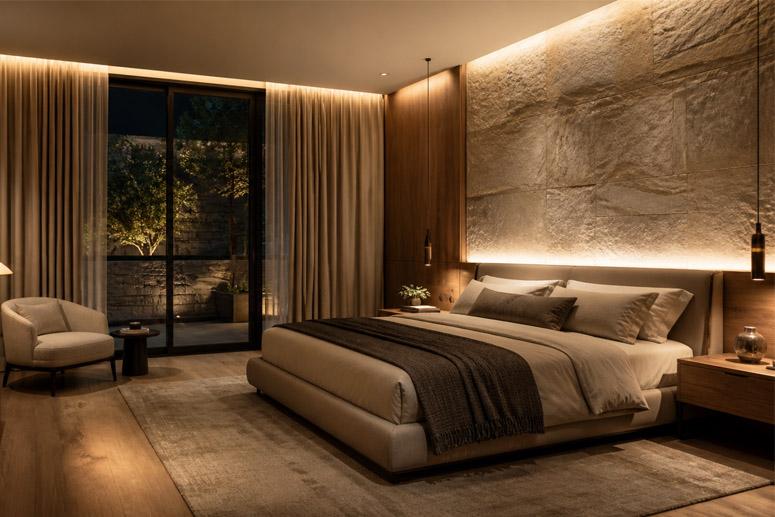
Bedroom:
The bedroom is a place for relaxation. Avoid harsh, bright white lights directly overhead. Instead, use small lamps on bedside tables and soft low-level lights (foot-lights) so that getting up at night doesn’t expose your eyes to glaring light.
Kitchen:
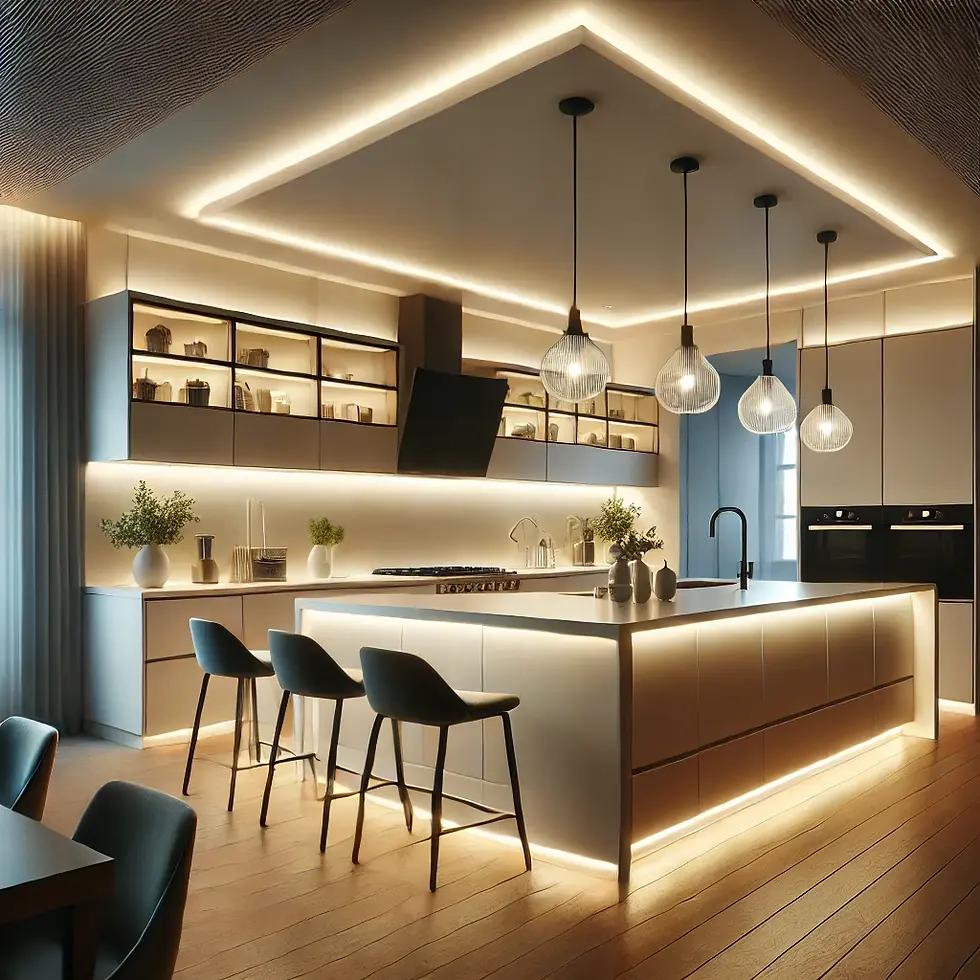
The kitchen sees a lot of activity, so it requires bright, clear lighting. A single ceiling light isn’t enough; standing at the counter to chop vegetables would cast your own shadow over the workspace. Installing profile lights under the cabinets is essential to ensure adequate illumination. Bathroom: There should be lighting behind or above the bathroom mirror that shines directly onto your face, ensuring clear visibility while shaving or applying makeup.
7. How to Choose the Right Color Temperature?
Explain to the customer in simple terms that the color temperature of the light completely transforms the room’s ambiance. It is measured in ‘K’ (Kelvin):
Warm White (2700K–3000K):
This is a soft, yellowish light that is soothing to the eyes. It is ideal for bedrooms, living rooms, and lounge areas where you want to relax.
Neutral White (3500K–4000K):
This light is neither overly yellow nor stark white; it looks completely natural. It works best in dining rooms, lobbies, or dressing areas.
Cool White (5000K–6500K):
This is a bright, crisp white light that keeps you alert. It should be used in kitchens, study rooms, home offices, or bathrooms where tasks requiring precision are performed.
Best Lighting Fixtures for Luxury Homes
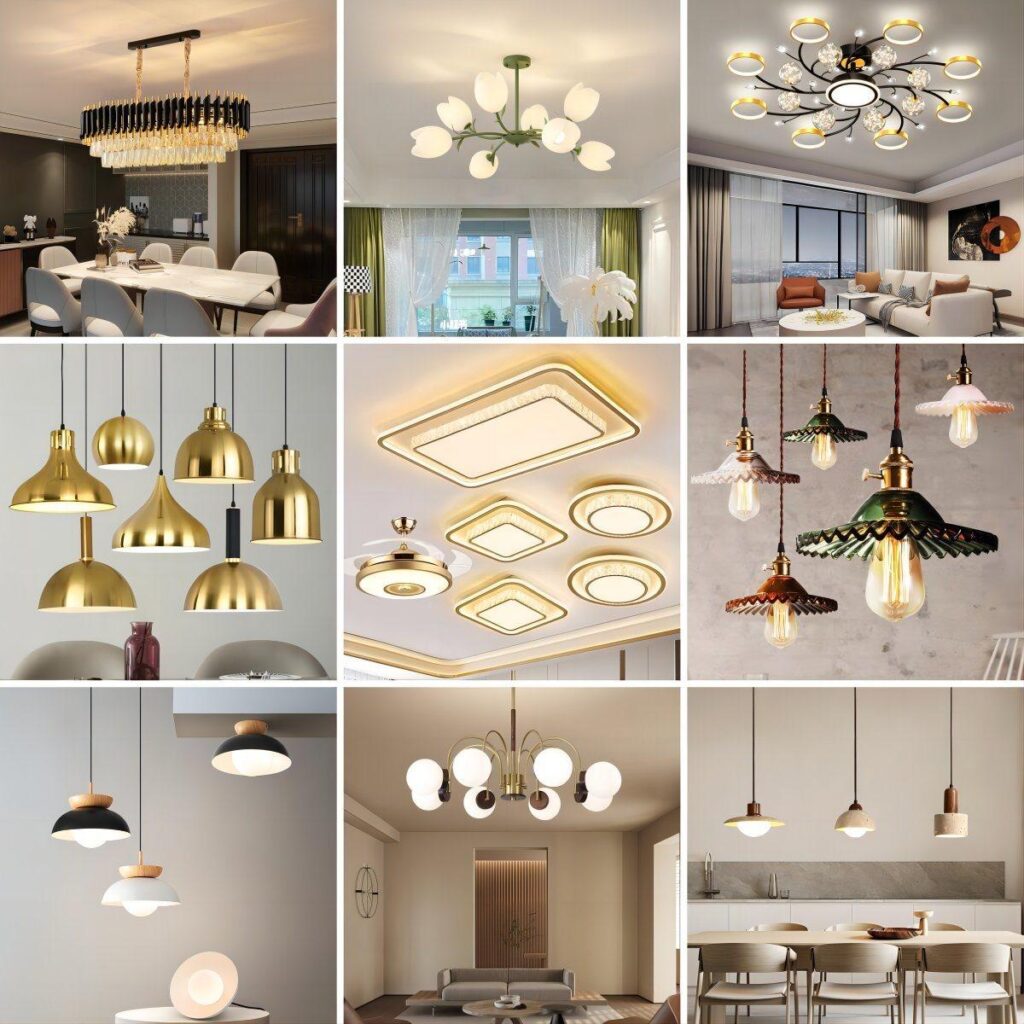
To achieve a luxurious look, a variety of beautiful lighting options are available in the market:
Chandeliers:
These are installed in the center of the ceiling in living rooms or dining areas. They create a royal ambiance the moment one enters the room.
Pendant Lights:
These lights hang down from the ceiling. They look excellent positioned directly above kitchen counters or dining tables.
Wall Lights (Sconces):
These are mounted on walls. They look stunning in hallways or on either side of the bed in the bedroom.
Recessed Lights (Concealed Lights):
These are embedded within the ceiling, with only the light itself visible. They are essential for providing uniform illumination throughout the room.
Cove Lights:
These are concealed within the edges of a false ceiling. The light they emit does not glare directly into the eyes; instead, it reflects off the ceiling and diffuses downwards, lending the room a premium and soft aesthetic.
9. Making the Most of Natural Light
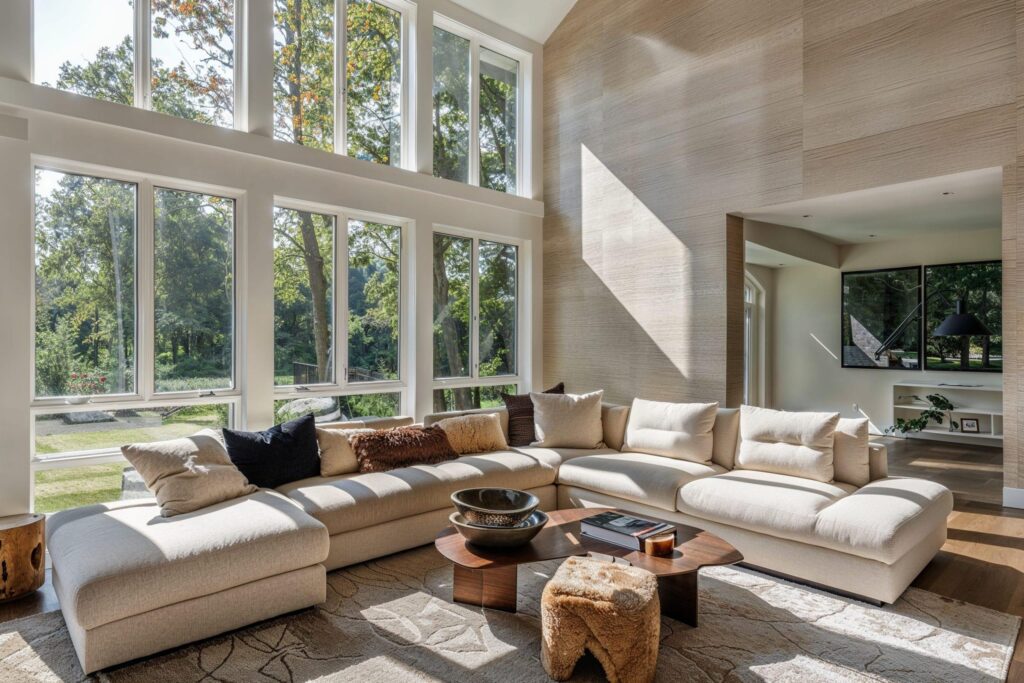
In a magnificent home, electric lighting isn’t everything. One should also fully utilize natural sunlight during the day.
The home should feature large windows, glass doors, and light-colored curtains. The more natural light that enters, the fresher, more spacious, and more positive the home will feel. Additionally, this leads to significant savings on electricity during the day.
10. Common Lighting Mistakes to Avoid
People often make these mistakes—even in expensive homes—which you should avoid:
Ignoring Room Size:
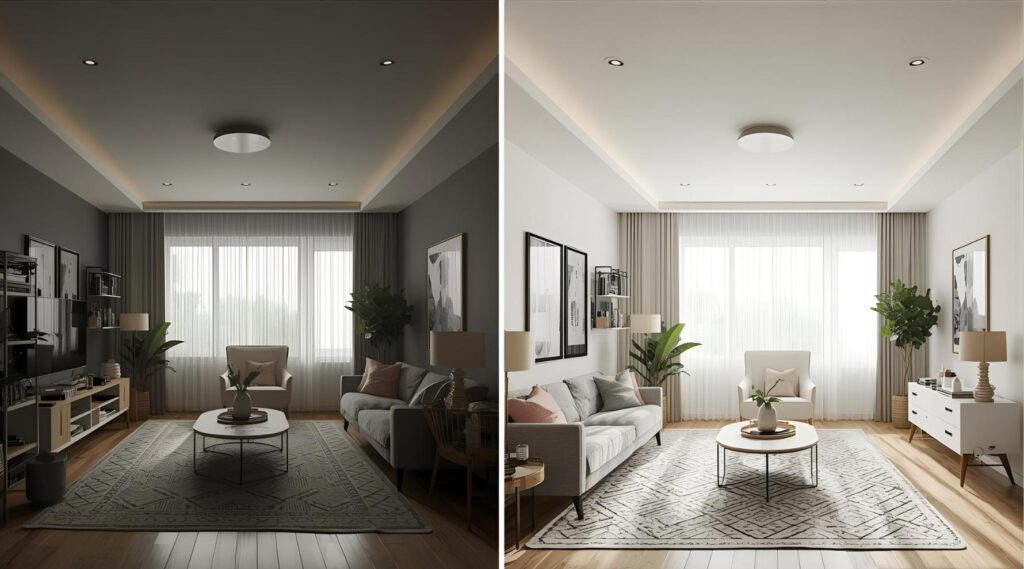
Installing an oversized chandelier in a small room or placing only two tiny bulbs in a massive hall. Always select lighting fixtures that are proportionate to the size of the room.
Relying on a single light source:
Installing just one bright light in the room and assuming the job is done. This leaves corners dark and ruins the luxury aesthetic.
Choosing the wrong light color:
Installing harsh blue-white lights in the bedroom, which can interfere with sleep at night.
Opting for cheap, low-quality lights:
Buying lights to save a little money, only for them to malfunction frequently or dim significantly within a few months.
11. Why hire a professional lighting consultant?
“Just as we don’t treat ourselves when sick but instead visit a specialist, a professional lighting consultant is essential to beautifully design the lighting for a high-value home.”
Prevents wasted money:
They advise you on the perfect lighting for your home upfront, saving you from purchasing unsuitable or unnecessary fixtures.
Eliminates shadow issues:
They know exactly at what angle to position lights so that your own shadow doesn’t fall on you while you are working or sitting.
Five-star look:
A professional can transform your home from ordinary to something resembling a luxurious five-star hotel—a look that will draw praise from every visitor.
Frequently Asked Questions (FAQs)
Q1. Which lighting is best for a luxury home—white or yellow?
Ans: A luxury home requires a blend of both. Warm (yellow) lighting works well in relaxation areas like bedrooms and living rooms, while neutral or cool (white) lighting is best for workspaces like kitchens and study rooms.
Q2. Are LED lights suitable for luxury interiors?
Ans: Yes, absolutely! Today, premium LED lights are the standard choice for all luxury homes. They consume very little electricity, do not heat up, and have a long lifespan.
Q3. What is meant by ‘Layered Lighting’?
Ans: It refers to using different lights for different purposes within the same room—such as concealed lights for general illumination, a spotlight for a painting, and a chandelier for aesthetic appeal. The combination of these elements is known as layered lighting.
Q4. How many lights should there be in a living room?
Ans: This depends on the size of the living room. However, a standard living room setup typically includes 4–6 concealed lights for ambient lighting, a main chandelier or pendant light, and cove lighting within the false ceiling.
Conclusion
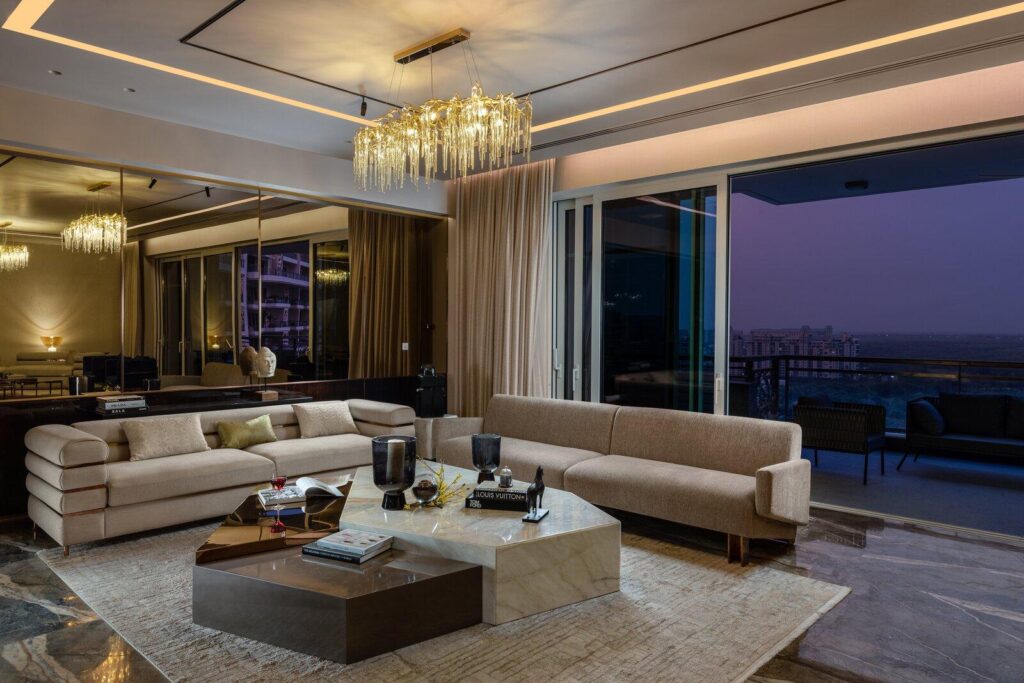
A luxurious home is defined not merely by expensive furnishings, but by how you showcase them to the world. Proper lighting breathes life into your home’s design. Therefore, when building your dream home, do not treat lighting as an afterthought; instead, plan it meticulously from the very beginning. A well-executed lighting plan will ensure your home remains beautiful, comfortable, and valuable for years to come.